Reflections on the Innovation Process
Reflections on the Innovation Process
An interpretive model born from the experience of a deep-tech startup, where the speed at which knowledge is generated is a matter of survival
Technological knowledge
A recent exchange of views on hydrogen prompted me to write this article, returning to a question I have been asking myself for years and that we have often discussed within the Keydro team: how much of our assessment of technologies depends on what we know today?
Hydrogen is an energy carrier that is complex to handle and, in many applications, still expensive. It is reasonable to believe that, in the current technological and economic context, its most concrete uses are industrial ones, particularly where it enters directly into production processes. This is also the direction in which we have steered Keydro’s research and development.
These assessments are based on the technological performance we know today. Research can change the underlying assumptions on which we estimate the economic viability of a technology, opening up possibilities we could not even consider before: the evolution of photovoltaics, in both performance and cost, has overturned judgments that seemed definitive twenty years ago. The same logic underlies the targets that the US DOE sets in many energy fields: goals that are unattainable today, which guide research by pushing it to move closer to them.
We had a direct example of how new technological knowledge can reshuffle the cards with our reactors. We had designed them for hydrogen storage and controlled release, but during experimentation we realized that they could open up alternative solutions in other fields as well, such as synthetic methane production.
A research path launched to solve a specific problem generated a new intelligence-knowledge cycle, opening a branch away from the original path.
In a deep-tech startup, experiences of this kind are everyday occurrences, and they raise two questions:
- how to assess branches, which can be fundamental but also dangerous because of their intrinsic tendency to draw focus away from the original research path;
- how not to lose the value of newly acquired or perceived knowledge.
Seeking an answer to these two questions opens a third, which lies at the heart of this article and encompasses them: how to accelerate the generation of new technological knowledge in a deep-tech company without compromising its reliability and without losing research focus.
From Information to Knowledge
Today we have access to an enormous amount of information that we often cannot process and manage: information is easy to find, yet few innovate. The leap occurs when intelligence manages to identify relationships, draw inferences and formulate hypotheses that can be put to the test.
To describe this process, based on the evidence gathered during our research journey, I propose a model built on five elements: human intelligence, information, inferences and hypotheses, development and experimentation, new knowledge.
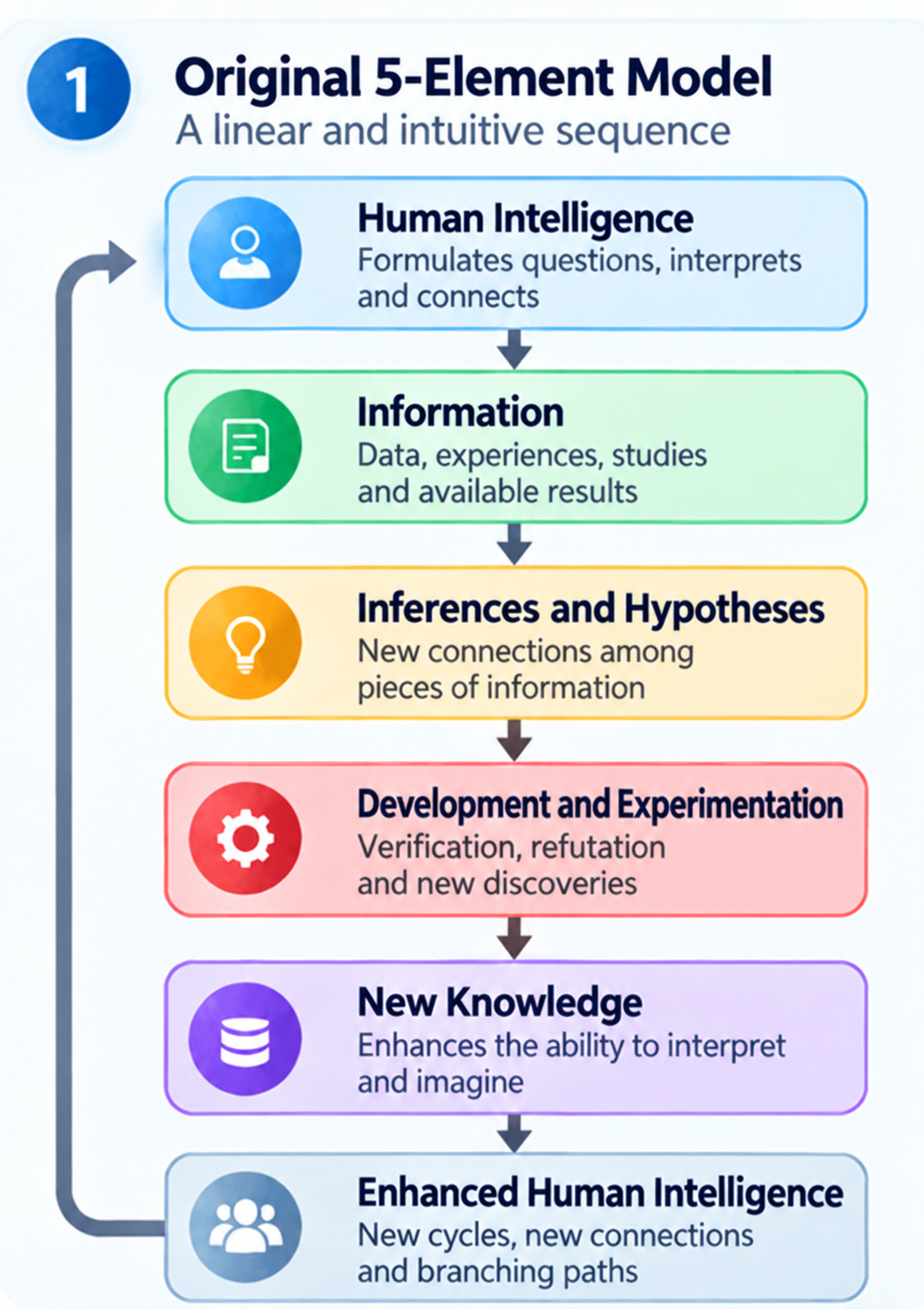
It is easy to see that, once new knowledge has been acquired, it enriches our ability to interpret, assess and imagine. This is where the cycle feeds itself, leading us to formulate questions and recognize possibilities that previously escaped us.
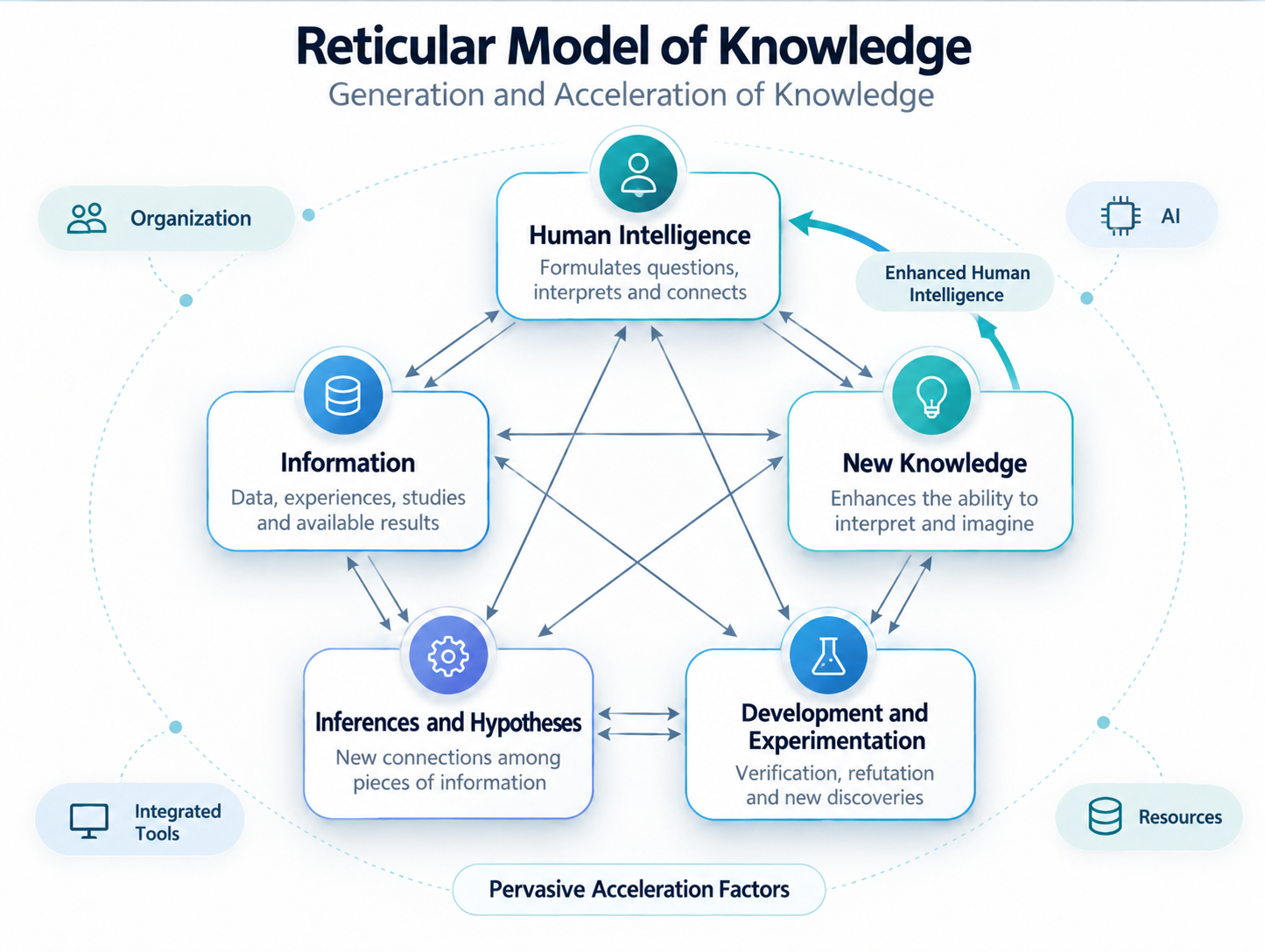
Over these years, experience has led me to think of the linear intelligence-knowledge model in a more “dynamic” way, which I call reticular, because the five elements interact continuously, in multiple directions and even simultaneously. An unexpected result can change a hypothesis, a simulation can guide new tests, newly acquired knowledge can lead us to reread earlier data in a completely different way.
Connection Is the Pivot
This is the decisive step. New knowledge does not arise from the mere accumulation of information, but from the connections we formulate, the questions we ask ourselves and the hypotheses we test. By connection I mean any relationship we hypothesize between data, phenomena or pieces of knowledge that can be put to the test: not the arrows of the model, but what travels along them, namely the hypotheses formulated, the evidence gathered and the steps that lead to new conclusions.
A new idea prompts us to gather information, information suggests hypotheses, hypotheses call for evidence. Sometimes, however, the process is reversed: a new piece of evidence – a result that works – needs to be explained, and from there hypotheses are formulated and supporting findings are sought. In the first case, what emerges is theoretical knowledge awaiting experimental verification; in the second, applied knowledge awaiting an explanation. In both cases, much of its value lies in the paths taken, not only in the points of arrival.
Some connections are confirmed, others refuted, others still change meaning as new evidence emerges. The answers to the two questions raised at the outset rest on this: documenting connections so as not to lose knowledge, assessing them to decide which branches to pursue.
This is why preserving the outcome of an experiment is not enough. It is important to also document the relationship we hypothesized, the evidence supporting it, the test carried out, the conclusion reached and the reasons for any subsequent revision. Even a disproved explanation, if the test is rigorous, becomes part of our knowledge base.
From sequence to network: the three models compared
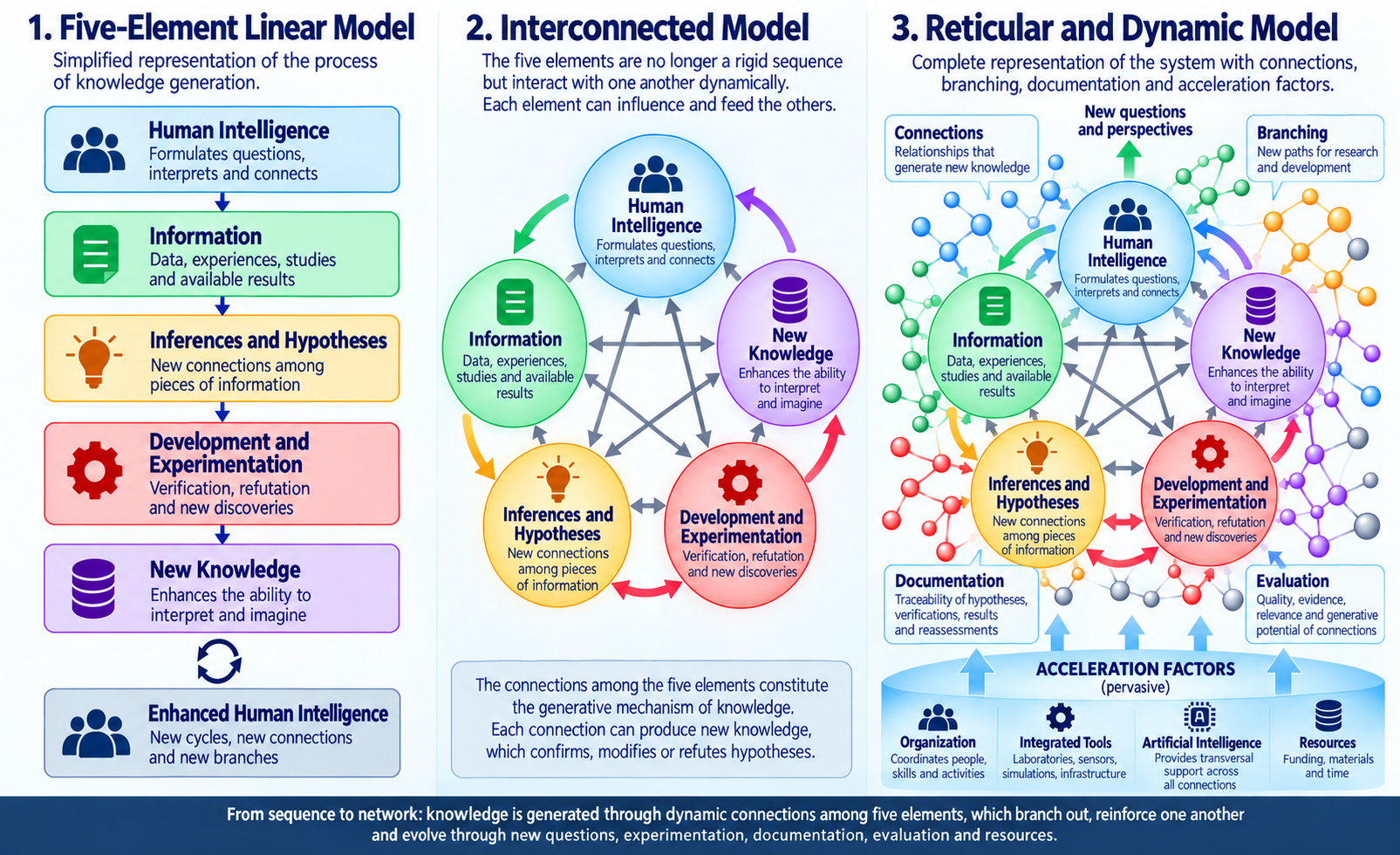
Connections can be assessed by strength of evidence, relevance, originality and ability to open further paths. Their history must remain accessible, because what seems marginal today may take on a different meaning tomorrow. Not all imagined connections are already knowledge, let alone verified knowledge: the possibility of correcting them is an integral part of the process.
Creativity, from this perspective, is not a separate moment. It is present whenever we question a hypothesis, reconsider a result or discover an unexpected relationship. The cycle does not close in on itself: it becomes a network of spirals and branches involving individuals, research groups, companies and, through the dissemination of knowledge, society.
What We Have Learned at Keydro
I would like to offer a concrete example, without going into the proprietary details of our technologies. In our research on solid-state hydrogen storage systems, we hypothesized and tested four different ways of transferring energy to the materials.
Thanks to the development of in-house instrumentation and the integration of different skills, we moved from an initial pace of about one experiment per month to sessions in which we could carry out about fifteen experiments per day, three days a week, over two weeks: roughly ninety tests.
This does not mean that knowledge grew at the same pace as the tests: we did, however, greatly increase our ability to explore hypotheses. Some results we interpreted correctly, others, initially, we did not. We therefore repeated tests and checks until we understood that in some cases energy transfer was taking place differently from what we had hypothesized.
That correction proved decisive: it became part of the knowledge that allowed us to set up the first generation of our reactors. It was also a choice of focus: we concentrated resources on one approach, while the other three remain documented, together with the hypotheses and tests carried out, as research directions to return to when time and resources allow. They are suspended branches, and therefore still open.
Generating Knowledge and Accelerating It: Two Distinct Domains
This experience led me to break down the third question raised at the outset into two distinct domains:
- how new knowledge is generated through the interaction among the five elements of the model;
- how to accelerate this process without sacrificing its reliability and without losing research focus.
Organization, availability of resources, technological tools and artificial intelligence are not additional stages of the model, but pervasive factors capable of making the interactions among all its elements more effective.
Returning to the example of our reactors: sensors and data-acquisition software provide real-time data, enabling almost instantaneous preliminary analyses; subsequent simulations help generate hypotheses, sometimes alternative ones, which new experiments take up and put to the test. These are activities that communicate with and feed one another.
AI can facilitate access to information, the search for inferences and the reading of results, without replacing experimental verification. Likewise, sophisticated tools are not enough if the organization cannot integrate them; and even an efficient organization faces concrete limits when the necessary capital, equipment or time are lacking.
From the example of the ninety experiments, we can derive three measurable phenomena and one criterion for assessing the quality of connections:
| Phenomenon | What can be measured |
|---|---|
| Speed of experimentation | How many tests we can carry out per unit of time |
| Evolution of connections | How many connections are confirmed, refuted or reinterpreted |
| Knowledge generation time | How long it takes to reach reliable conclusions and make them available for further work |
| Criterion | What to assess |
| Quality of connections | Originality, strength of evidence, relevance and ability to generate new connections |
Acceleration, from this perspective, is the change in these indicators over time: more tests per unit of time, more verified connections, less time to reach reliable conclusions. These indicators are not enough to assign a value to each piece of knowledge, but they make its evolution observable.
It is on this ability to make the evolution of knowledge observable and measurable that I believe a system – people, organization and tools – capable of accelerating its generation should be built
A Challenge We Have Already Begun
For three years at Keydro we have been trying – still today with enormous limitations and difficulties – to transform knowledge from a mere result to be documented into a continuous process of connections to be represented, verified, assessed and revisited.
With the five-element model, I tried to give theoretical form to the approach started at Keydro. The reticular reading I propose today has matured through laboratory experience, misinterpretations, corrections and progressively acquired knowledge.
The necessary tools, at least to a large extent, already exist. The challenge is to integrate them and build an organization capable of using connections continuously and documenting them without turning research into a bureaucratic exercise. It takes will, resources, skills and work.
Keydro’s scale-up will be an important test bed, both for the technologies we are developing and for this approach’s ability to support their evolution. Industrial success alone will not be enough to demonstrate the general validity of the model. We will, however, be able to compare what we have learned, how we have documented it and how much we have managed to accelerate the process.
This is the challenge I want to share: not only to develop new technologies, but to improve the very way we generate knowledge.
I like to think that this article has opened a reflection on the subject that will lead others to continue it, discuss it and perhaps propose divergent views.
Text written by the author on the basis of his own experience at Keydro. Language editing and consistency check carried out with the support of artificial intelligence; English translation and figures produced with AI.
Jacopo Sagramoso
Founder & CEO, Keydro
.

Beyond Hydrogen Storage: The Importance of Hydrogen Buffering
Beyond Hydrogen Storage:
The Importance of Hydrogen Buffering
Hydrogen Storage: Beyond Capacity, Towards Efficient Management
In the hydrogen industry, the challenge is not simply to store hydrogen, but above all to manage its accumulation and subsequent use efficiently, safely, and flexibly.
Conventional hydrogen storage technologies, particularly those based on high-pressure compression, require infrastructure and components designed to operate under demanding conditions. High pressures involve energy consumption for compression and require particular attention to hydrogen permeation, the integrity of containment systems, and the thermal and mechanical stresses associated with filling and discharge cycles.
Another relevant aspect concerns rapid decompression phenomena, which can compromise the integrity of certain polymeric and elastomeric materials used in sealing systems, making careful selection of components and operating conditions essential.
In industrial applications, the effectiveness of hydrogen storage cannot therefore be assessed solely in terms of the amount of hydrogen stored. It is also necessary to consider the system’s ability to supply hydrogen at the flow rates and pressures required, adapt to variations in industrial processes, and minimize energy consumption, losses, and plant complexity.
From this perspective, hydrogen storage is no longer simply a means of containment but becomes a tool for the dynamic management of hydrogen flows.
Storage vs. Buffering: Two Different Functions
In industrial hydrogen management, ensuring process continuity requires the ability to compensate for temporary fluctuations between hydrogen availability and actual consumption.
This function can be performed using different storage technologies, including pressurized storage systems. Although these are well-established solutions, they may require complex infrastructure and significant energy consumption, particularly when high compression ratios are involved.
It is important to distinguish between 𝘀𝘁𝗼𝗿𝗮𝗴𝗲 𝗮𝗻𝗱 𝗯𝘂𝗳𝗳𝗲𝗿𝗶𝗻𝗴. Storage primarily addresses the need to retain a given quantity of hydrogen, while buffering refers to a specific storage function designed to dynamically compensate for temporary imbalances between production and consumption.
A buffering system must therefore be capable not only of temporarily storing hydrogen but also of making it available according to the operational requirements of the industrial plant.
By analogy, buffering can be compared to the function of a capacitor in an electronic circuit: a component capable of temporarily storing energy and releasing it when needed, thereby contributing to system stability. In the case of hydrogen, this function involves temporarily storing a given mass of gas and subsequently releasing it at the flow rates and pressures required by the process.
The effectiveness of a hydrogen buffering system therefore depends on several parameters:
- Usable hydrogen storage capacity;
- Response time to changes in demand;
- Controllability of hydrogen absorption and release flow rates;
- Ability to withstand repeated cycles without significant performance degradation;
- Energy efficiency throughout the entire operating cycle;
- Safety and ease of integration into industrial plants.
Buffering therefore introduces a different perspective on hydrogen storage: not only how much hydrogen can be stored, but above all how and when it can be made available.
The Potential of Keydro Solid-State Buffering
Solid-state hydrogen storage technologies (materials-based hydrogen storage) represent a potential alternative to conventional storage systems and offer promising opportunities, particularly for hydrogen management at relatively low pressures.
However, these technologies face several challenges that may limit their industrial competitiveness:
-
Potentially high initial capital expenditure (CAPEX);
-
Hydrogen absorption and release kinetics that are not always compatible with the dynamic requirements of industrial processes;
-
Overall system weight, including hydrogen-absorbing materials, reactor, and auxiliary components;
-
Energy and thermal requirements associated with hydrogen absorption and desorption cycles;
-
Complexity of integrating materials, reactor architecture, and thermal management systems, particularly when moving from laboratory scale to industrial applications.
Keydro’s technological innovation stems from the need to address these challenges through an integrated approach to solid-state hydrogen storage.
Keydro has adopted a design approach in which the hydrogen-absorbing material is not considered an isolated element but is integrated with the reactor architecture and dedicated electronic systems for managing operating conditions.
The guiding principle of the technology is the co-evolution of structured metamaterials and reactor design, whereby the characteristics of the material and those of the system enabling its operation are developed together.
Through this integration, Keydro has developed a Proof of Concept (PoC) aimed at influencing hydrogen absorption and release dynamics, with particular attention to actuation methods, system response, and the management of the energy required for operation.
Experimental activities have provided initial evidence that hydrogen release kinetics can be influenced through dedicated actuation systems, establishing a technological foundation for the subsequent development of industrial hydrogen buffering solutions.
A central element of Keydro’s approach is the integration of electronic control systems, aimed at progressively improving the ability to manage hydrogen release according to the operational requirements of the downstream industrial process.
At the same time, operation at relatively low pressures offers the potential to reduce compression requirements compared with high-pressure storage architectures, potentially simplifying integration into industrial plants.
The technology is currently in the development phase following the initial demonstration of its operating principle. The next activities will focus on thermal optimization, characterization of overall energy performance, verification of cycle repeatability, and validation of industrial scalability.
Keydro’s objective is therefore not simply to develop new materials for hydrogen storage, but to create an integrated system capable of managing hydrogen absorption, storage, and release in a controlled, efficient manner, compatible with the requirements of industrial processes.
Within this vision, solid-state hydrogen storage evolves from a simple containment technology into a functional component of industrial hydrogen management, opening new opportunities for applications requiring operational flexibility, continuous hydrogen supply, and safety.
Keydro: Brevetti+ 2024 Grant Confirmed
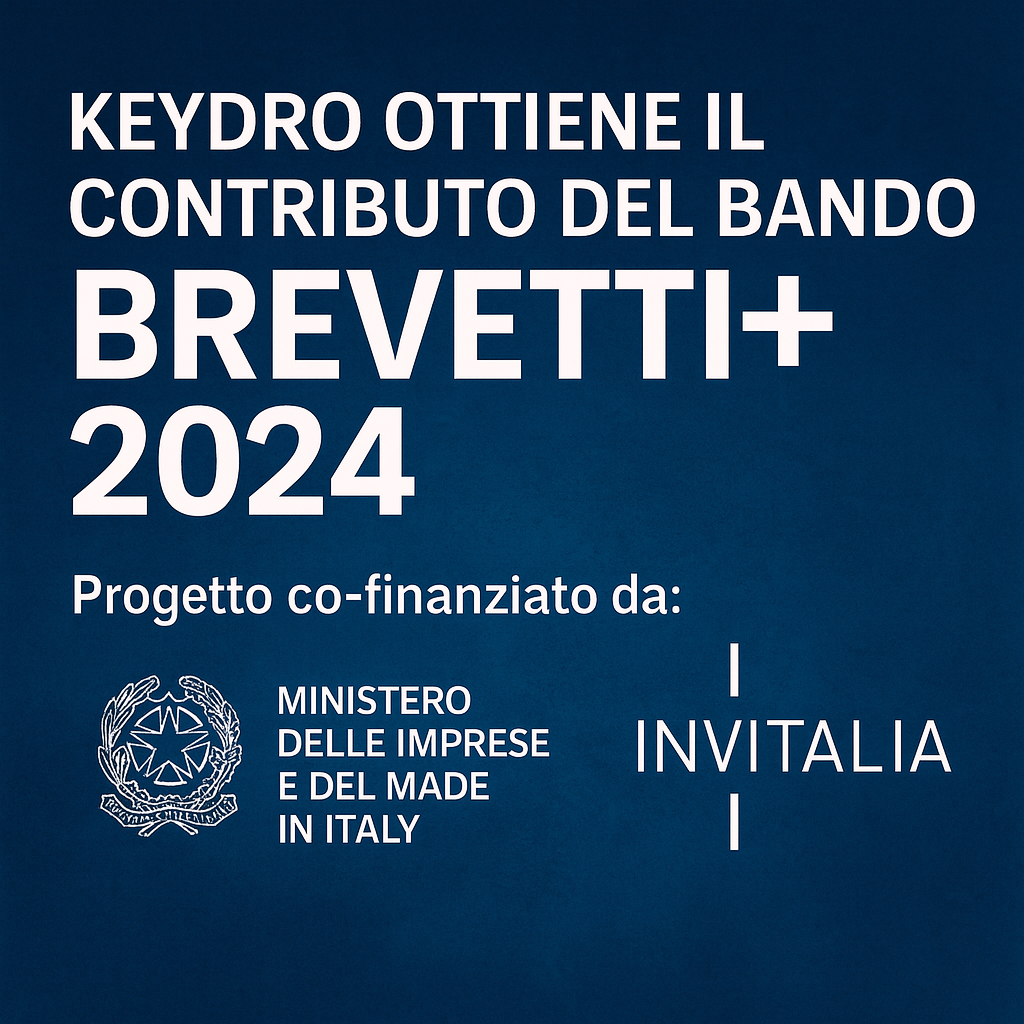
Keydro has reached another milestone: the allocation of the Brevetti+ 2024 grant, promoted by the Italian Ministry of Enterprises and Made in Italy and managed by Invitalia, has been officially confirmed following the positive evaluation of our project reporting.
The grant, amounting to up to €78,000 in non-repayable funding, will support activities aimed at enhancing our patent for low-pressure hydrogen storage. This is an important step in accelerating Keydro’s expansion strategy in Italy, across Europe, and worldwide.
This achievement, combined with the patent already granted, confirms the strong interest in our technologies and the quality of our research, further strengthening our commitment to developing tangible and sustainable solutions for the energy transition.
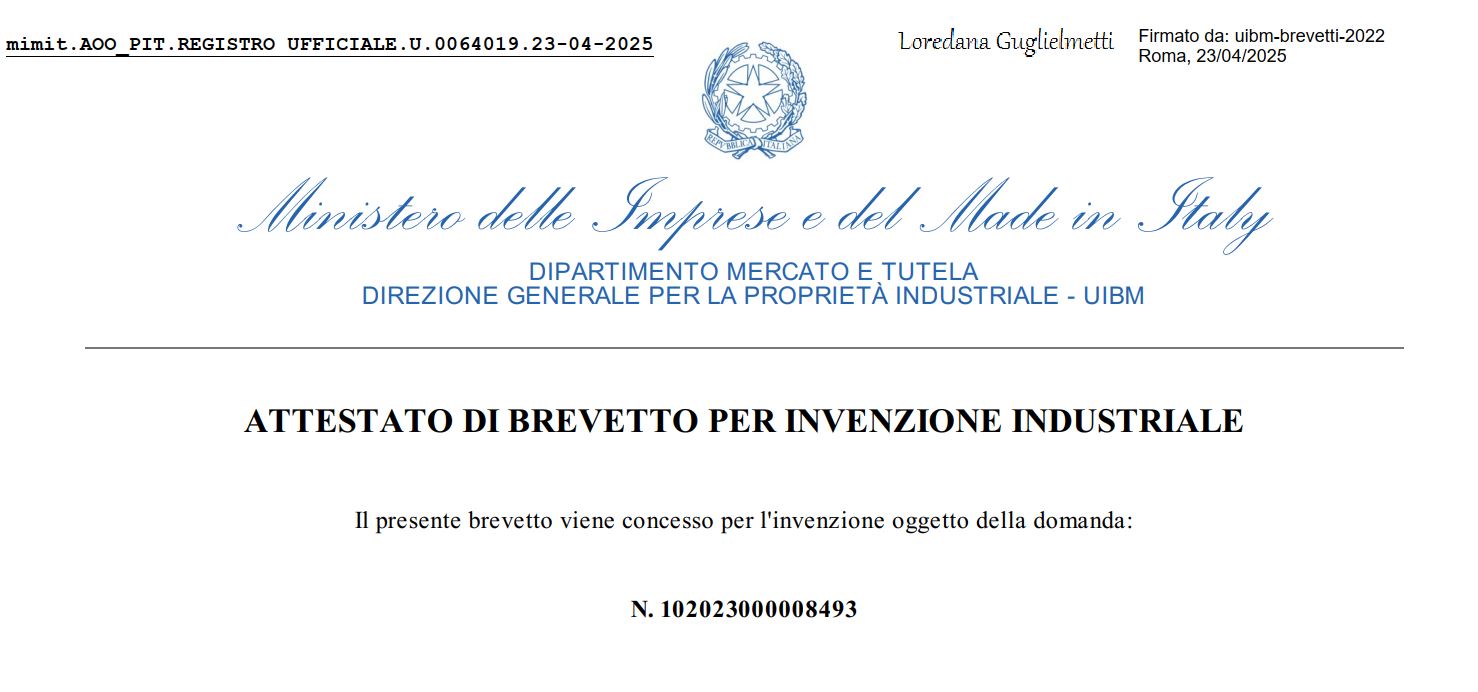
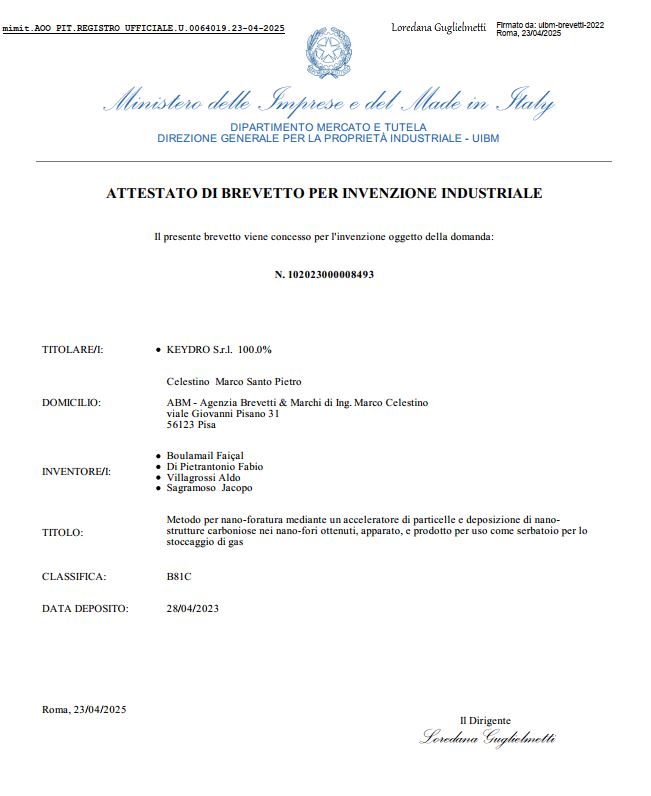
We are happy to announce the grant of Italian patent n. 102023000008493 to Keydro!
We are happy to announce the grant of Italian patent n. 102023000008493 to Keydro!
Keydro is glad to inform partners, investors and the wider hydrogen‑technology community that the Italian Ministry of Enterprises and Made in Italy (MIMIT) has officially granted us Patent No. 102023000008493, protecting our proprietary new material system for safe, high‑density hydrogen storage.
This invention, developed entirely in‑house by our R&D team, uses novel, nanoporous meta‑alloys that physically adsorb hydrogen at low pressure and ambient temperature, overcoming the safety and cost barriers that have long limited large‑scale adoption of hydrogen.
Securing national patent protection is a key milestone that validates the originality of our approach and paves the way for corresponding filings in strategic international markets.
We are accelerating the proof‑of‑concept phase: a pilot module is currently being fabricated and will undergo field testing with selected academic partners in Q4 2025. These tests will benchmark gravimetric capacity, charge/discharge kinetics and full life‑cycle sustainability against incumbent compressed‑gas and cryogenic‑liquid solutions.
We extend heartfelt thanks to the entire Keydro team, our academic collaborators and early‑stage investors for their commitment and belief in our mission.

Keydro's technology presents a mitigated risk
Keydro's technology presents a mitigated risk
Innovative companies in the field of energy and material-related technologies, such as Keydro, face significant challenges in supply chain coordination and risk management compared to traditional industries. The main reasons why Keydro could successfully overcome these obstacles are as follows:
- Supply chain: Innovative companies typically rely on a network of emerging technologies that are not yet fully developed or standardised. Keydro is entering into the hydrogen market, which is globally consolidated and estimated at USD 170 billion in 2023 and is expected to grow at a compound annual growth rate (CAGR) of 9.3% from 2024 to 2030 [1]. By bringing security, efficiency and cost savings, Keydro’s technology complements an existing and established industry.
- Coordination with Unscaled Technologies: In the early stages of development, many new energy solutions depend on other technologies. This interdependence can create bottlenecks and delays. For the same reason mentioned above, Keydro’s technology, in part, does not require coordination with unscaled technologies.
- Reduction of power costs for hydrogen storage: Keydro’s solution has lower energy requirements. Typically, the core of green tech has high energy requirements.
- Efficient solution: The focus of Keydro project is the proposal of a much more efficient solution for storing hydrogen. Reducing the risk of switching to our more efficient solution requires strong partnerships and supply chain integration.
- Scalability: Keydro is studying a tech easy to industrialize a scale and is also studying a way to accelerate its innovation.
- Dependence on external raw materials: Keydro’s proposed technology allows a specific geographic area to utilise the resources available in that area to create the new materials. Keydro’s tech pemit to mitigate volatile cost of materials.
In summary, we’re well aware of the need for risk mitigation, cost reduction and the need to have accelerate innovation.
[1] Link to data – Hydrogen market is driven largely by the fertilizer and refining industries
Interview generated by an AI on the basis of texts from the website Keydro.it
As a test, we "fed" the artificial intelligence with all the texts on our website www.keydro.it.
The aim was to check the congruence of what we had written. The A.I. gave us both a summary and an amusing pseudo-interview that not only confirmed the congruence of the texts, but also enthusiastically explained the purpose of our activity and, while remaining in the virtual sphere of the A.I., we thought it would be a very amusing and at the same time educational result to share with you.
Click here to listen to the interview
Collaboration with the Chemistry Department of the University of Pavia is strengthened
Collaboration with the Chemistry Department of the University of Pavia is strengthened
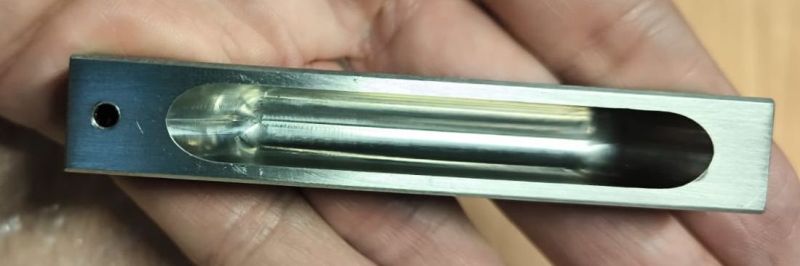
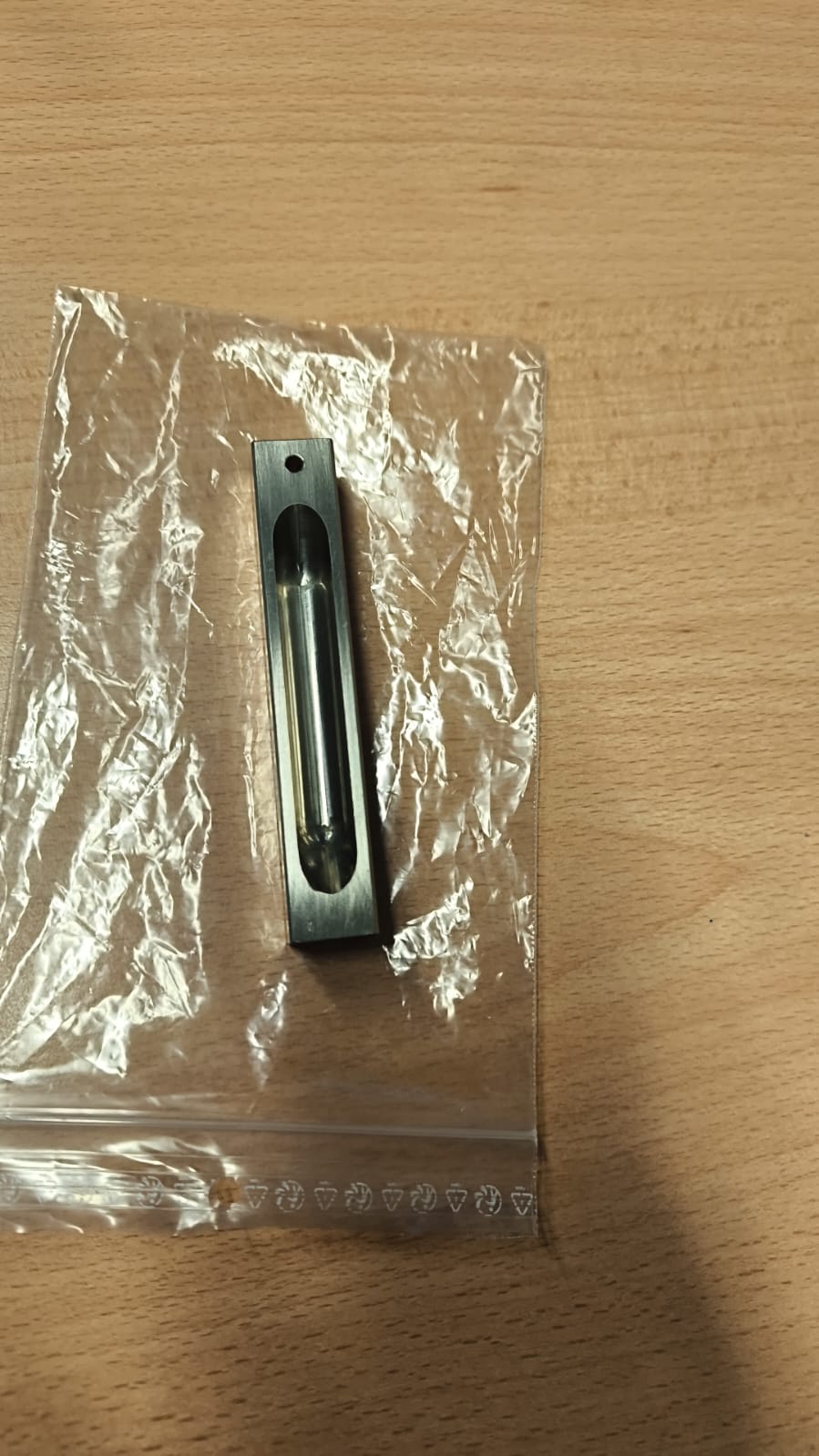
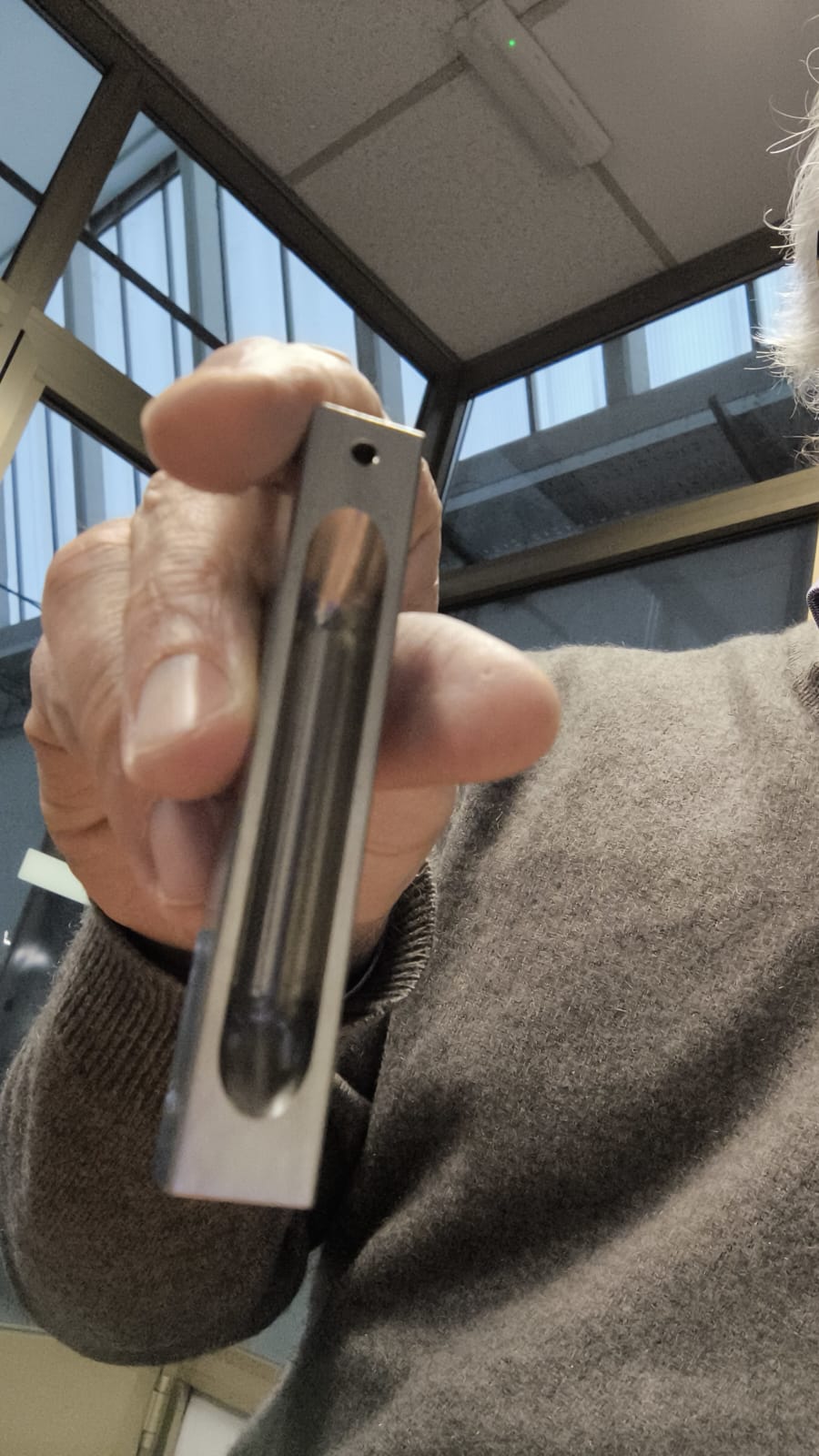
Milan 10 February 2025 – Keydro, based on specifications defined with the University of Pavia, has designed and produced special shuttles to contain carbon-based materials during the activation process. This process is the one that leads to the stage necessary to increase their porosity and introduce micropores, making them usable for the absorption of gases and emerging pollutants. The treatment is usually conducted with KOH and the alumina shuttles used so far reacted with the base, contaminating the sample in increasing amounts as the shuttle’s lifetime increased.
Professor Chiara Milanese, Head of the Hydrogen Laboratory at the Department of Chemistry of the University of Pavia, stated ‘The Keydro’s special vessels have solved a major problem for us, in fact, they do not react with C-based materials and with KOH up to temperatures above 650°C in N2 flow, and allow us to obtain ultra-pure super-activated C with gravimetric hydrogen storage capacities 1. 5 times higher than materials prepared in alumina (and thus containing Al) and with kinetics even 2 times better at -196°C and hydrogen pressures up to 10 bar’.



Keydro signed a strategic collaboration whit CNR to realise an innovative hydrogen tank
Keydro signed a strategic collaboration whit CNR to realise an innovative hydrogen tank
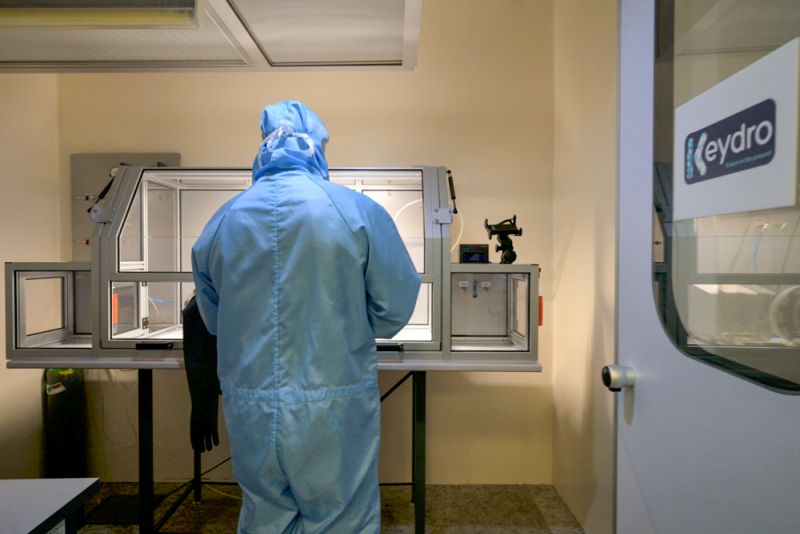
Milan, 10 November 2024 – Keydro has concluded a strategic partnership with the Institute for Microelectronics and Microsystems (IMM-CNR) of the Italian National Research Council (CNR) to realise the Proof of Concept (PoC) of a tank designed to contain hydrogen at room temperature and low pressure.
The defined activity envisages the creation of a special laboratory with dedicated machinery and instrumentation, and mainly three macro-areas of collaboration between IMM-CNR and Keydro:
1. characterisation of filters with nanometric materials,
2. realisation of the accumulation system,
3. release system.
Jacopo Sagramoso, CEO of Keydro stated: “the objective defined with the Institute for Microelectronics and Microsystems of the CNR is ambitious and extremely challenging, dealing with complex and frontier subjects. We are aware of the challenge we have undertaken and are convinced that we have created a team with excellent skills that will carry out the work defined.”
Sagramoso added, ’we came to define the project after a careful feasibility and patent prior art study. In IMM-CNR, we have found a partner capable of guaranteeing us an innovative and fertile environment capable of incorporating and improving the proposed innovation. We also have the will to extend the collaboration into the subsequent development phases’.
Fabio Di Pietrantonio, Senior Researcher at IMM-CNR said: ‘The Italian National Research Council (CNR), has in its mission the promotion and development of scientific and technological research. In this context, the joint research contract signed with Keydro aimed at the optimisation of innovative materials for hydrogen storage, with the objective of improving the efficiency, safety and sustainability of emerging technologies in the energy sector.